
A Considered Welcome to a Different Kind of Care
There comes a point for many people where even the most consistent routines do not fully address everything. This service exists for those moments.
You may already be eating well, exercising regularly and taking good care of yourself — yet certain concerns remain. It could be an area of stubborn fat that resists every effort, or skin that has begun to soften in ways that affect your confidence. It might be an intimate concern that has been quietly weighing on you for longer than you would care to admit. These experiences are personal, and they deserve professional, respectful attention.
This service was founded on a simple but important belief: that people have the right to receive thoughtful, expert care without pressure, embarrassment or disruption to their daily lives. By bringing professional non-surgical treatments directly to the client, it becomes possible to offer something that traditional clinics rarely can — a genuinely comfortable, private and individual experience, without compromising on clinical quality.
Whether your concern is aesthetic, functional or both, the approach here is the same: to listen carefully, plan thoughtfully and treat with precision. The goal is never perfection. It is simply to help people feel more settled and more confident in their own skin.
Why Professional Treatment Makes a Meaningful Difference
Non-surgical care has transformed what is possible for people seeking support with aesthetic and wellness concerns. The key lies not only in the treatments available, but in how they are delivered.
For many people, the appeal of non-surgical treatment goes beyond avoiding an operation. It offers a more manageable path to addressing concerns that have been present for months or years — concerns that perhaps felt too minor for surgery but too persistent to ignore. Surgical intervention carries real practical challenges: recovery time, physical disruption and an emotional commitment that many people are not ready for or simply do not want. Non-surgical options exist precisely to serve those who need genuine support without such consequences.
The flexibility this model offers matters enormously. Treatment can be planned gradually, adjusted as circumstances change and built around what a person actually needs — rather than what a standardised protocol prescribes. This is especially important when concerns overlap or evolve. Someone beginning with body contouring may also find that skin firmness or confidence more broadly becomes part of the conversation. A well-structured non-surgical service can accommodate that complexity in ways that feel proportionate and human.
Professional non-surgical care also enables a more honest dialogue. Rather than promising overnight transformations, the focus remains where it belongs: on genuine assessment, careful planning and realistic expectations about what treatment can achieve. That honesty is foundational. It builds trust, and trust is perhaps the most important element in any treatment relationship — particularly when the concerns being discussed are personal.
Honest, Informed Guidance
Professional care means honest conversations about what treatment can and cannot achieve. Realistic expectations lead to better outcomes and more lasting satisfaction.
Clinically Professional Standards
Even outside a clinical setting, professional standards never waver. Every treatment is assessed for appropriateness, applied with precision and supported by aftercare guidance.
Truly Personalised Planning
No two people are the same. A well-considered treatment plan is built around the individual — their concerns, priorities, history and personal goals — not a generic template.
How the Treatment Process Works
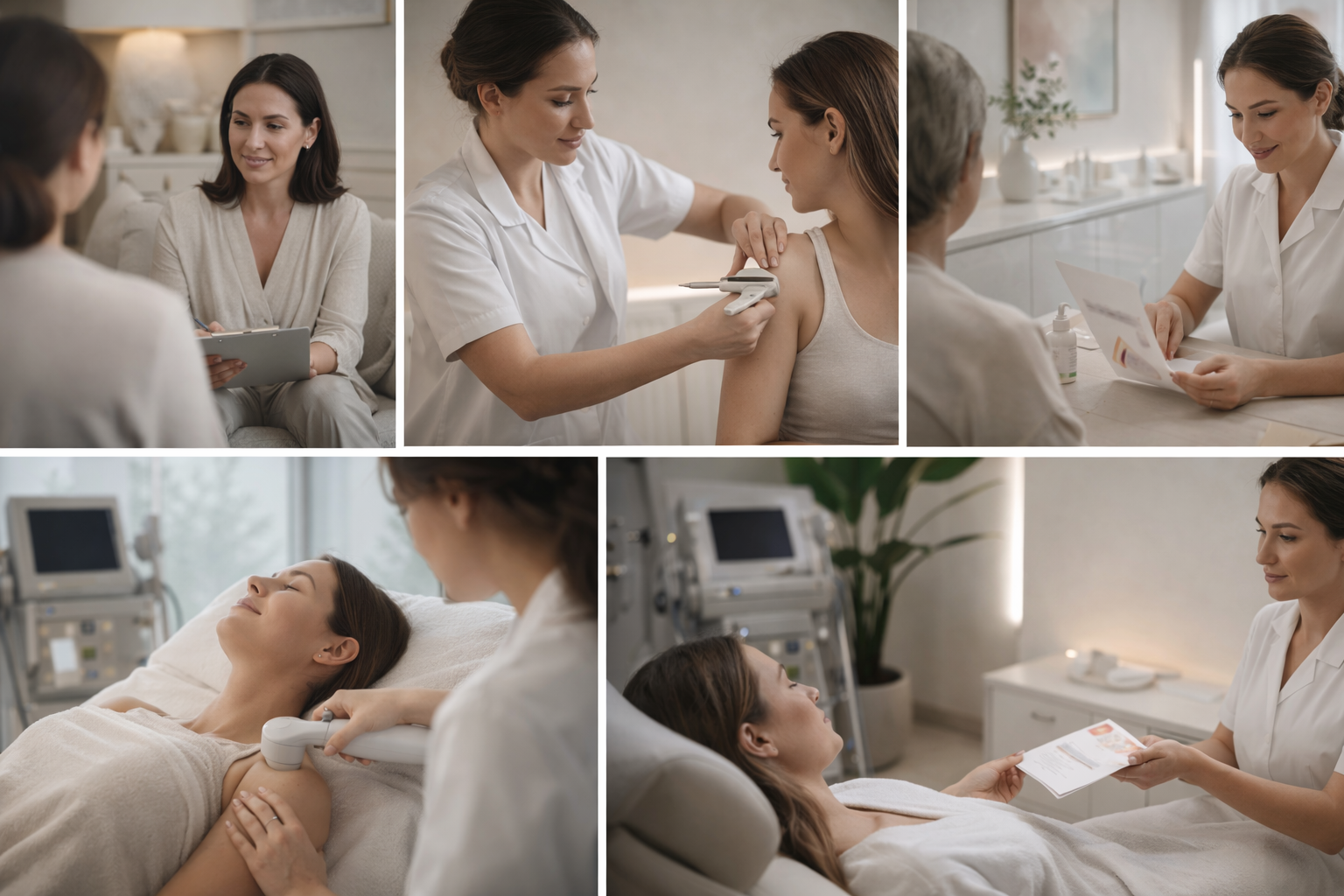
One of the most common reasons people delay treatment is uncertainty about what the process actually involves. A well-run service removes that ambiguity at every stage.
The journey toward treatment does not need to feel daunting. When a service is thoughtfully structured, each stage flows naturally from the last, and the person at the centre of it always knows where they are and what to expect. Below is a clear picture of how the process typically unfolds.
The First Conversation
Most journeys begin with a straightforward conversation — pressure-free and without obligation. This initial exchange is a platform for understanding. The intention is to hear what a person is concerned about, what they hope to achieve and whether this service feels like the right fit. For many people, simply speaking openly about a concern that has been private for some time is itself a meaningful step. A professional and empathetic response creates the right foundation for everything that follows.
Consultation and Assessment
Should the individual choose to proceed, the next phase focuses on proper evaluation. This is where genuine treatment planning begins. Concerns are explored in context, options are discussed in plain language and the suitability of each approach is carefully considered. A responsible consultation leaves the person feeling fully informed rather than overwhelmed. Questions are welcomed, expectations are set clearly and there is no pressure to make immediate decisions. Time and pace are guided entirely by the individual.
Personalised Treatment Planning
From consultation, the conversation becomes genuinely personal. The appropriate plan depends on the area or areas of concern, the individual's priorities and the outcomes they are seeking. Sometimes, a single well-chosen treatment is the clearest path. In other cases, a more gradual, multi-stage approach is more appropriate. What matters is that the plan feels tailored and proportionate — reflecting the person's actual circumstances rather than a templated protocol. At no point should someone feel they are being guided toward something unsuitable or unnecessary.
Treatment in a Familiar Setting
Receiving treatment at home removes a significant proportion of the anxiety that often accompanies aesthetic or wellness care. There is no unfamiliar waiting room, no perceived need to present oneself to strangers and no feeling of being out of place. The familiar surroundings help people feel more settled, ask better questions and engage with the process more openly. All of this contributes to a more positive experience — and often better outcomes.
Aftercare and Ongoing Support
Good care does not stop when a session ends. Clear aftercare guidance, honest expectations about how results develop over time and the reassurance that follow-up support is available all form an essential part of the experience. People should never feel that once treatment is complete, they have been left to manage alone. Continuity of care builds trust and helps people feel supported throughout their journey, not merely processed through it.
Who Is Suitable for Non-Surgical Treatment
Non-surgical treatment is not a single-profile service. People come from many different backgrounds and with many different concerns. What they tend to share is a preference for thoughtful, professional support that does not require surgical intervention.
This type of care tends to appeal to people who are already taking good care of themselves but find that certain concerns persist despite their efforts. It is suited to those who want visible or meaningful change but prefer a gradual, measured approach. It is well-matched to those who value privacy and discretion, and who would find the environment of a traditional clinic uncomfortable or impractical.
Some people arrive with a very clear idea of what they want to address. Others have a sense that something has shifted but are less certain about what the right path might be. Both starting points are entirely valid. What is important is that the service meets people where they are, rather than expecting them to arrive with a ready-formed brief.
Non-surgical treatment is also appropriate for those who have considered more invasive options but feel that surgery represents too significant a step — whether practically, emotionally or medically. It is a legitimate and substantive alternative, not simply a stepping stone toward something more dramatic.
Those with Persistent Body Concerns
People who eat well and exercise regularly but continue to experience areas of stubborn fat or changes in body composition that routine effort has not resolved.
Those Seeking Skin Improvement
Individuals noticing changes in skin firmness, texture or appearance — including those who want to look refreshed and more like themselves, rather than radically different.
Those with Intimate Wellness Concerns
People dealing with concerns related to intimate health or confidence — issues that may have been present for some time but have never been properly addressed in a safe and supportive environment.
Those Who Value Privacy
Anyone for whom a clinic setting would create unnecessary anxiety, exposure or logistical difficulty — and who would find it far easier to engage with care in a familiar environment.
Those with Busy Lives
People whose work, family responsibilities or geographic location make regular clinic appointments difficult or impractical to organise.
Those Who Prefer a Gradual Approach
Individuals who want to explore treatment at their own pace, without feeling pushed toward decisions, and who prefer results that emerge naturally over time.
Types of Concerns This Service Addresses
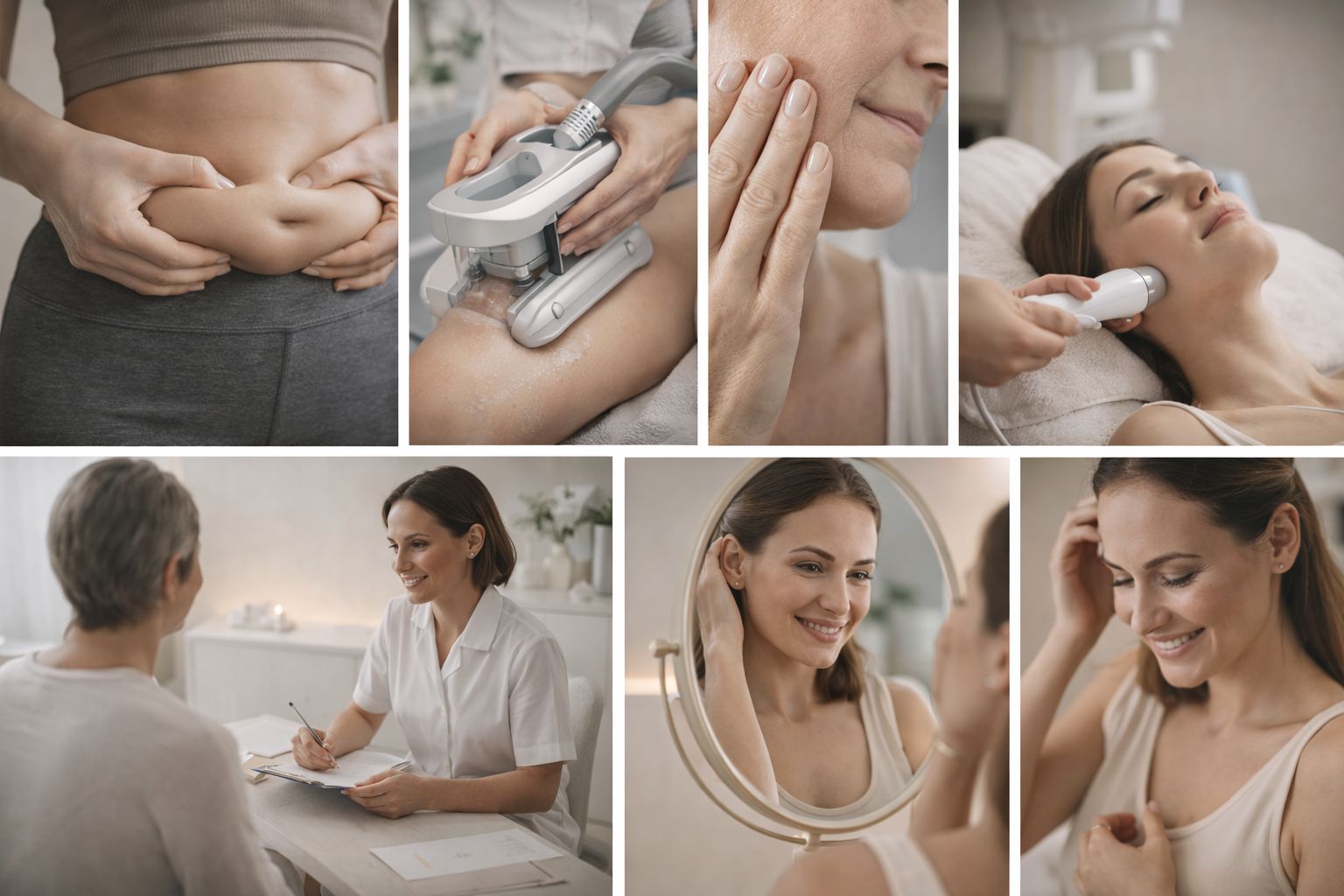
The concerns that draw people to non-surgical care are varied. Some are primarily aesthetic; others are functional, emotional or deeply personal. What unites them is the value of having appropriate, professional support.
Stubborn Fat and Body Contouring
One of the most commonly discussed frustrations is the experience of working hard to maintain a healthy lifestyle yet being left with areas of fat that simply do not respond. This might be the abdomen, thighs, arms, flanks or other specific areas where the body tends to hold onto deposits. This can feel disproportionately demoralising, particularly when someone has already invested considerable effort.
Non-surgical body contouring treatments address these localised concerns in a targeted and non-invasive way. They are not a replacement for healthy living — no credible service would suggest otherwise — but they offer genuine assistance with precisely the types of issues that routine effort rarely resolves. For many people, this kind of targeted support is what they have been looking for.
Body toning options may also be of interest to those seeking to complement their existing fitness activities — not because the scales suggest it, but because they want to feel more proportionate, more defined or simply more confident in their own physicality.
Skin Laxity, Texture and Ageing
Changes to the skin are a natural part of ageing, but that does not mean people should feel unable to address the aspects of those changes that affect how they feel day to day. Loss of firmness, changes in texture and subtle shifts in facial definition can all have a real impact on confidence — even when the concern might appear minor to others.
Many people seeking help in this area are not looking for a dramatic transformation. They want to look fresher, more rested and more like themselves — not dramatically altered. Non-invasive skin-tightening and rejuvenating treatments can help achieve those outcomes with a precision and subtlety that many people find reassuring.
Similarly, targeted treatment for specific skin concerns — blemishes, irregularities and similar issues — can make a real difference to confidence when something is noticed every day. What seems small from the outside can feel significant when you are the one looking at it consistently.
Intimate Wellness and Confidence
Few treatment conversations are more significant than the ones people have been postponing for the longest. Concerns relating to intimate wellness — including vaginal health, bladder confidence, physical comfort and related changes — are frequently held privately for years. Many people feel embarrassed to ask whether effective options exist, or fear that their concerns will not be taken seriously.
When these concerns are addressed in a supportive, discreet and professional environment, people are far more willing to speak openly about what they are experiencing. That candour is the first step toward genuinely better support. Intimate wellness is not a separate or lesser concern — it is closely bound up with confidence, relationships and quality of everyday life.
Incontinence-related issues, in particular, can quietly shape a person's decisions in ways that are rarely visible to others but deeply felt: which social events are attended, what exercise is undertaken, how travel is planned, and how at ease a person feels simply moving through their day. Proper support in this area can make a profound difference.
Confidence and Emotional Wellbeing
Aesthetic care is frequently misunderstood as purely surface-level, but the reasons people seek treatment tend to be far more human than that. Confidence shapes how people move through the world. It influences what they wear, how freely they socialise, how comfortable they feel in intimate situations and how much mental space a persistent concern occupies each day.
When something has been quietly affecting a person for a long time, it becomes a form of background noise — always present, always consuming a small but steady amount of energy. People who seek treatment are not being vain. In most cases, what they want is not more attention from others but less self-consciousness in themselves. They want to feel free of something that has been weighing on their confidence for longer than they may have spoken about.
When treatment is approached in that spirit — as a contribution to wellbeing rather than an exercise in vanity — it takes on a significance that goes well beyond the aesthetic. The most meaningful results are often not the most dramatic ones. They are the quiet, personal changes: walking more freely, dressing with greater ease, feeling less guarded in situations that used to feel uncomfortable.
Treatment Options and What to Expect
The value of a well-structured non-surgical service lies not in the number of treatments available, but in how they are selected, assessed and delivered within a coherent philosophy of care.
Each option within this service has been considered for its appropriateness within a non-invasive model of professional care. They are intended for people who want effective support without the severity of surgical alternatives — and who prefer a process that feels personal rather than clinical. Below is an overview of the principal treatment categories.
Fat Freezing and Body Contouring
Cryolipolysis — more commonly known as fat freezing — works by applying controlled cooling to targeted areas of the body. The process is designed to reduce localised fat deposits in areas that have proven resistant to diet and exercise. It is a non-surgical procedure that requires no anaesthesia, no incisions and no recovery period in the traditional sense.
Sessions are typically comfortable and allow the individual to remain relaxed throughout. The area being treated may feel cool or numb initially, but this generally subsides quickly. Results develop gradually over several weeks as the body processes the treated cells naturally. This is considered part of what makes the treatment appealing: changes emerge progressively, in a way that tends to look and feel natural rather than sudden.
Fat freezing is most appropriate for those with defined pockets of stubborn fat who are otherwise near their target weight or stable within a healthy range. It is not a weight-loss solution and is most effective when used as part of a considered approach to body confidence rather than as a standalone intervention.
HIFU – Skin Tightening and Rejuvenation
High-Intensity Focused Ultrasound (HIFU) is a non-invasive treatment that uses focused ultrasound energy to stimulate collagen production within the deeper layers of the skin. It is principally used for skin tightening, lifting and overall improvement in skin firmness — areas of the face, neck and décolletage are among those most commonly treated.
The treatment is typically completed in a single session, with results continuing to develop over the following weeks and months as the body's natural collagen response takes effect. This gradual emergence of results is one reason that outcomes from HIFU tend to appear natural and proportionate.
HIFU is suitable for those noticing early to moderate signs of skin laxity or loss of definition, and for those seeking a non-surgical alternative to procedures such as facelifts or neck lifts. Suitability is always assessed individually, as the degree of skin change and individual factors affect how well any treatment will respond.
Morpheus8 – Skin Remodelling
Morpheus8 is a fractional radiofrequency treatment that combines microneedling with radiofrequency energy to remodel and resurface the skin at a deeper level. It is used for improving skin texture, reducing the appearance of fine lines, addressing stretch marks, and improving overall skin quality.
The treatment is valued for its ability to address concerns that sit below the surface of the skin — particularly those relating to firmness, elasticity and texture — without requiring surgical intervention. Results build over time and can be quite significant for the right candidate.
As with all treatments in this range, suitability is assessed on an individual basis. The treatment is generally not appropriate for all skin types or conditions, which is precisely why a thorough consultation is an indispensable part of the process before any treatment is considered.
Cryotherapy for Skin Concerns
Cryotherapy treatments use precisely controlled cold temperatures to address specific cosmetic skin concerns. They may be appropriate for a range of surface-level conditions — including certain types of skin tags, sebaceous hyperplasia, milia and other minor cosmetic irregularities — where a targeted, non-invasive approach is preferred.
These treatments tend to be precise, relatively brief and require minimal recovery. They are best suited to people with defined, localised skin concerns who want to address them in a controlled and professional manner without resorting to excision or more involved interventions.
It is important that the suitability of cryotherapy for any specific concern is assessed prior to treatment, as not all skin irregularities are best addressed through this approach. A thorough consultation ensures the right solution for the right person.
Intimate Wellness Treatments
Treatments for intimate wellness address a range of concerns relating to vaginal health, pelvic floor function, bladder confidence and associated physical comfort. These are concerns that many people carry privately for years before seeking professional support — often because they feel uncertain whether help is available or worried that their experience will not be taken seriously.
Non-surgical treatments in this area use technologies such as focused ultrasound or radiofrequency to improve tissue quality, tone and function in a non-invasive way. They are suitable for a range of presentations including mild to moderate stress urinary incontinence, vaginal laxity and associated confidence concerns.
Given the personal nature of these concerns, treatment is always conducted with the highest degree of discretion and respect. The home-based model is particularly well-suited to intimate wellness treatments, as the familiar environment makes it significantly easier for people to speak openly about what they are experiencing and to engage with care that feels genuinely supportive rather than clinical and impersonal.
Realistic Results and Managing Expectations
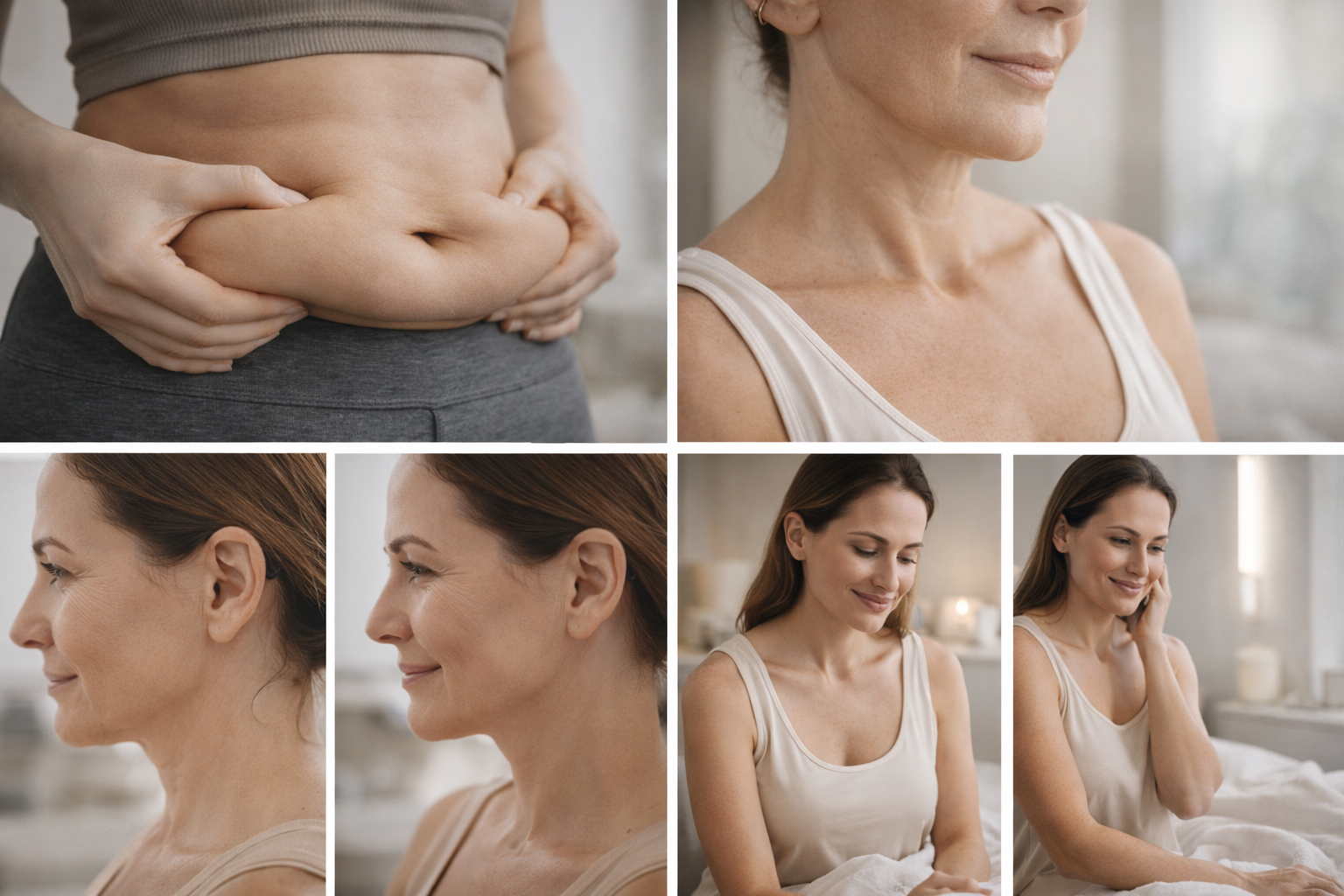
Honesty about outcomes is one of the most important things a professional service can offer. People deserve clarity about what treatment can achieve - not reassuring exaggeration.
People typically approach treatment with a combination of hope, uncertainty and caution. They want to feel better, but they also want to hear the truth. Overpromising might feel encouraging in the moment, but it rapidly dissolves trust - and trust is precisely what this kind of care depends upon.
Non-surgical treatments offer a pragmatic path: genuine clinical effectiveness without the disruption and risk of surgery. But they are not magic, and pretending otherwise would be dishonest. Results vary between individuals. Suitability varies. The appropriate approach changes depending on the person, the concern and the specific treatment involved. A good service is upfront about all of this.
For some people, the aim is subtle refinement - a quieter version of a visible change that matters deeply. For others, the most important outcome is renewed comfort, restored confidence or relief from a concern that has been shaping daily life in ways others cannot see. Not all meaningful results are dramatic. Often, the most significant difference shows up not in photographs but in how a person moves, how they dress, what they no longer avoid and how much less mental space a long-standing concern occupies.
That perspective matters because it aligns the conversation with what treatment is genuinely designed to do. It is not about pursuing an unattainable ideal. It is about helping people feel more settled, more at ease and more themselves. Realistic expectations lead to outcomes that feel satisfying precisely because they are rooted in reality rather than wishful thinking.
"The most credible services speak frankly. They describe what the treatment is supposed to do, who it might help, what the process feels like and what degree of improvement might reasonably be expected."Editorial Perspective — Patient Care Standards
Safety and Professional Standards
The quality and safety of any treatment depends not only on the technology used, but on the experience, judgement and care of the person delivering it. Professionalism begins long before any treatment takes place.
Professional standards in non-surgical care encompass how concerns are handled from the very first interaction. They are evident in the way options are explained, how honesty is used to set expectations, the rigour of assessment before any treatment is agreed and the care taken to ensure that every session is appropriate for that specific individual. Technology is an important component, but it is never sufficient alone. The real quality of a service is expressed through the human judgement applied at every stage.
Clients deserve to feel guided rather than sold to. They need to trust that if a treatment is not appropriate for their particular situation, that will be said plainly — and that no amount of enthusiasm or convenience will override proper clinical consideration. Safety and appropriateness are not optional features; they are foundational to any service that deserves the confidence placed in it.
- Full suitability assessment before any treatment is agreed
- Honest discussion of risks, limitations and expected outcomes
- Treatment delivered only when appropriate for the individual
- Clear explanation of every procedure in plain, accessible language
- No pressure applied toward particular treatments or packages
- Consistent standards maintained regardless of treatment location
- Transparent follow-up process and accessible aftercare support
- A culture of care in which sensitive concerns are handled with respect
Aftercare and Maintaining Results
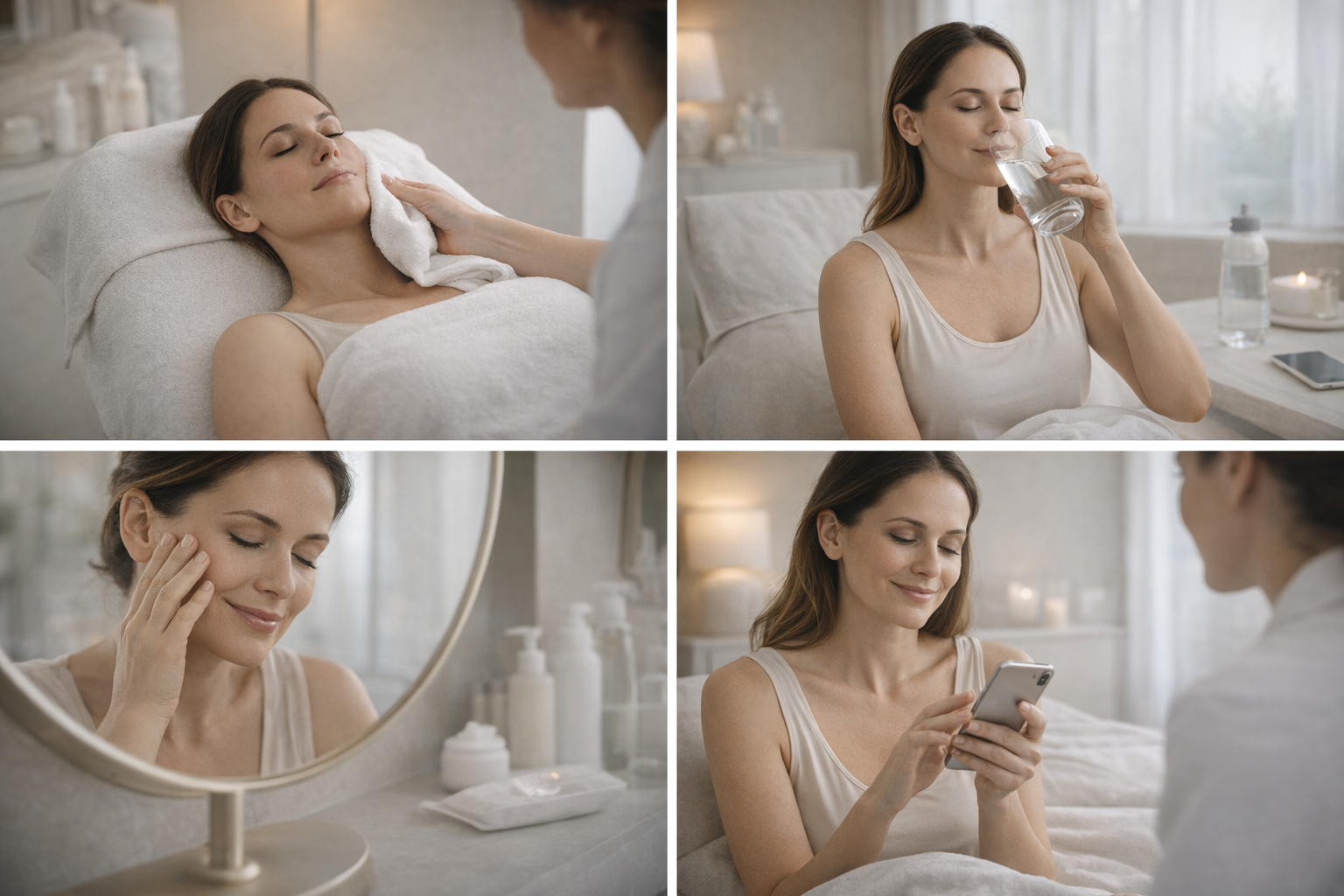
The experience of treatment should not feel as though it ends the moment a session concludes. Thoughtful aftercare is part of what makes a good service genuinely supportive.
Non-surgical treatments generally involve little or no downtime, which is part of their practical appeal. However, how a person supports their body in the days and weeks following treatment can have a meaningful influence on outcomes. Good aftercare guidance makes that process straightforward and removes uncertainty about what to expect as results develop.
Immediately Following Treatment
Immediately after treatment, the area may appear mildly flushed or feel slightly tender, depending on the procedure. This is entirely normal and typically resolves within a few hours. Clear, specific guidance will be provided about any products or activities to avoid in this initial period, as well as what to expect as the treatment area settles.
The Days and Weeks Following Treatment
Most non-surgical treatments work gradually over a period of weeks, as the body responds to the treatment at a cellular level. This means that the full effect of a session may not be visible immediately — and that is entirely expected. Being aware of this timeline is important for managing expectations and avoiding unnecessary concern if results are not immediately apparent.
During this period, it is generally advisable to maintain good hydration, follow a sensible diet and avoid habits that might counteract the treatment's intended effects. For body-focused treatments especially, supporting the process with consistent healthy habits helps to maximise outcomes.
Long-Term Maintenance
The longevity of results varies between treatments and individuals. Some procedures produce outcomes that can last for extended periods with appropriate care; others may benefit from occasional maintenance sessions. An honest discussion of expected duration and any recommended follow-up forms part of the treatment plan from the outset, so there are no surprises later.
For skin-focused treatments in particular, protecting the skin from sun exposure, maintaining a consistent skincare routine and avoiding known irritants all contribute to preserving and extending results over time. Specific guidance is tailored to the individual and the treatment received.
Ongoing Support
Support should remain accessible after treatment concludes. Whether a question arises about how an area is responding, concerns about the healing process or simply a need for reassurance, having clear access to follow-up support makes a genuine difference to how confident people feel throughout their recovery and beyond. The goal is for every person to feel properly cared for, not simply processed.
Frequently Asked Questions
Addressing common questions openly and honestly is an important part of helping people feel informed and at ease before they make any decisions.
Is this service only for people interested in body contouring?
Not at all. While body contouring and fat-focused treatments form an important part of the offering, this service also addresses skin tightening, facial rejuvenation, blemish treatment and a range of intimate wellness concerns. The service is broad, but the approach is always individual. People come for very different reasons, and the goal is to meet them where they are — not to prescribe a particular type of concern as more or less legitimate than another.
Do non-surgical treatments replace the need for a healthy lifestyle?
No — and no credible service would suggest otherwise. Non-surgical treatments are best understood as a complement to healthy living, not a replacement for it. Many people who seek this type of care are already taking good care of themselves, yet find that certain concerns have not responded to general efforts in the way they hoped. Treatment is there to address those specific issues more directly and professionally — it is not an alternative to a healthy diet, regular movement or general self-care.
Are home-based treatments as effective as those in a clinic?
Yes — provided the service is well-organised, properly delivered and based on strong professional standards. The quality of any treatment depends on the knowledge and skill of the practitioner, the suitability of the assessment and the appropriateness of the treatment to the individual's needs. These elements are entirely achievable in a home setting. In fact, many people find that the familiar environment actively supports the process: they are more relaxed, ask more questions and engage more openly with their care, all of which tends to improve the overall experience.
Who typically benefits from this type of service?
There is no single profile. This service attracts people who want professional, non-invasive treatment in a way that is discreet, manageable and tailored to their individual circumstances. Some are seeking aesthetic refinement; others are addressing concerns relating to comfort, intimate health or everyday confidence. What matters is not which category someone falls into, but what they personally need and how treatment can be shaped to serve that — which is why careful, personalised assessment is so central to the process.
Is every treatment suitable for every person?
No, and a well-run service will be honest about this from the outset. Suitability depends on the individual, the nature of their concern and the specific treatment being considered. A thorough consultation is the appropriate basis for that determination — not enthusiasm or convenience. A service that prioritises appropriateness over volume is one that can genuinely be trusted.
Will the results be dramatic?
Not necessarily — and in many cases, that is by design. Most people seeking non-surgical treatment are not looking for radical transformation. They want improvement that feels natural, proportionate and true to who they are. Some meaningful outcomes can appear subtle to others but be profoundly significant to the person experiencing them. The aim is never to make someone look dramatically different, but to help them feel more at ease, more confident and more at home in their own skin.
Is it comfortable to discuss intimate concerns in this setting?
Yes — and this is one of the areas where a home-based, discreet service makes the greatest practical difference. Many people do not seek help with intimate wellness concerns because they are concerned about embarrassment, judgement or not knowing whether effective options exist. When treatment is available in a respectful, professional and non-clinical environment, those barriers are significantly reduced. People are much more willing to speak openly — and that candour is the first step toward getting the right kind of support.
Why does privacy matter so much in this context?
A great deal of what draws people to aesthetic and wellness treatment is personal. Concerns relating to confidence, body image, ageing and intimate wellbeing are private by their very nature. People tend to be more open, more honest and more engaged when they are in an environment where they feel genuinely comfortable — not performing composure in an unfamiliar clinical space. The ability to ask questions freely, discuss concerns without self-consciousness and take time over decisions is not a luxury. It is part of what good care looks like.
Why is a personalised treatment plan so important?
Because the same concern can present very differently in different people, and the same treatment can be appropriate for one individual but entirely wrong for another. A personalised plan ensures that care is aligned with the individual's goals, circumstances, health history and priorities — rather than slotting everyone into a pre-existing template. That level of consideration is what separates genuinely professional care from a standardised, transactional service.
Is this service relevant for people who have been postponing treatment for a long time?
Very often, yes. A significant proportion of the people who engage with services like this do so after a long period of deliberation — thinking about it, comparing options, wondering whether anything is truly available for their concern, and finding that other pathways have felt too daunting or too inaccessible to pursue. A home-based, non-surgical model can make the idea of treatment feel considerably more achievable. Barriers become smaller. The decision to take action — something that may have been deferred for years — becomes possible.
Patient Experiences
The most meaningful measure of any service is how the people who use it feel — not just about the outcomes, but about the entire experience of being supported.
"I had been putting off doing anything about a concern that had bothered me for years. The home-based approach completely changed my thinking. I felt genuinely listened to from the very first conversation."— Client, Body Contouring
"I was nervous about discussing something so personal, but the whole experience was handled with real care and discretion. The treatment has made a difference I honestly did not expect to feel so strongly."— Client, Intimate Wellness
"Having treatment at home made everything much less stressful. The results have been gradual and natural-looking, which is exactly what I was hoping for. I feel more like myself again."— Client, Skin Rejuvenation
"The consultation was thorough, honest and completely without pressure. I was told exactly what to expect, including the limitations, and that honesty actually made me trust the process far more."— Client, HIFU Treatment
"I had tried a clinic before and found it quite impersonal and rushed. This experience was completely different. The level of individual care was something I had not expected but genuinely appreciated."— Client, Body Contouring
"I would not have been ready to discuss what I needed help with in a public clinical setting. The private, home-based approach made it possible. I only wish I had found this sooner."— Client, Intimate Wellness
Our Approach to Patient Care
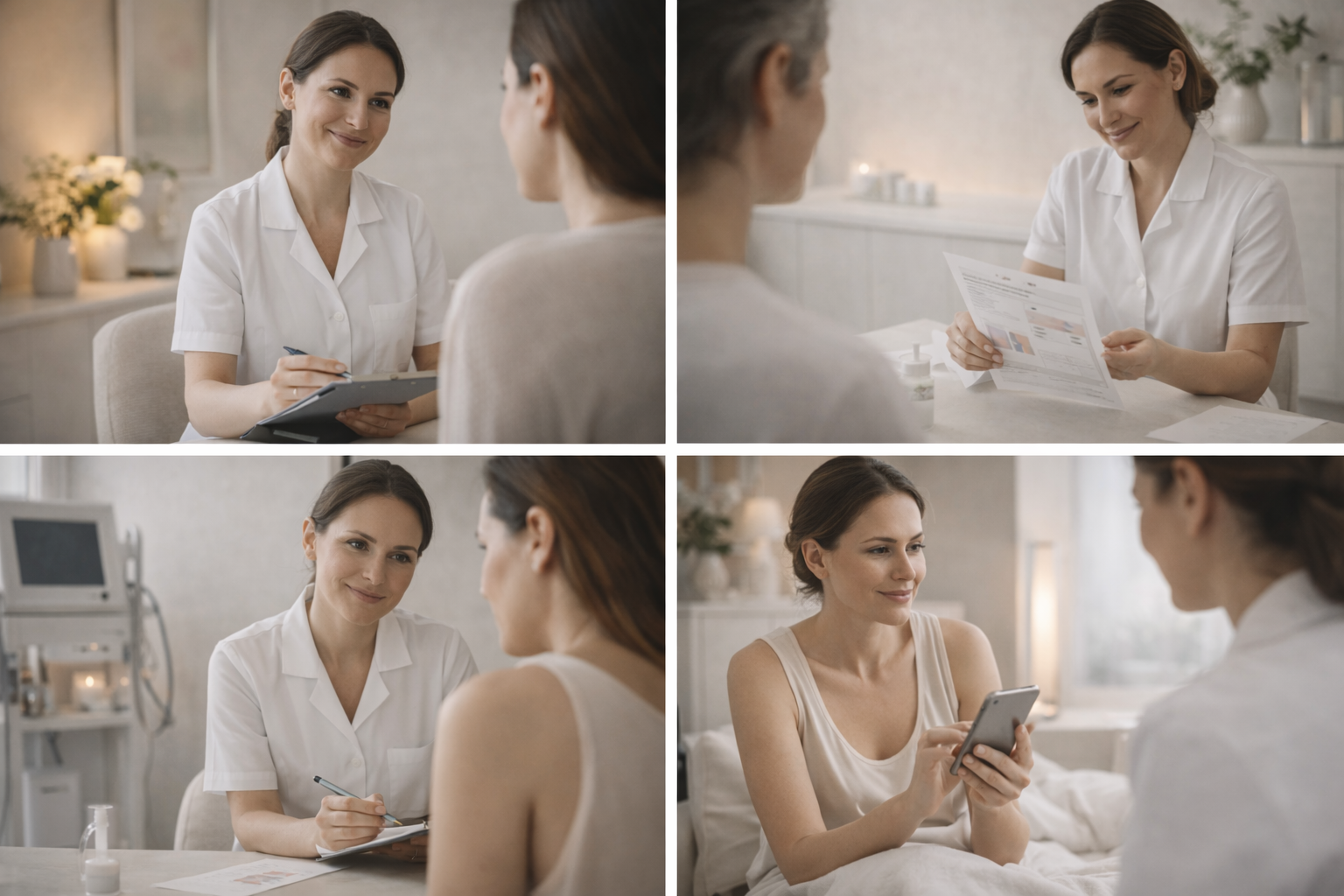
The philosophy behind this service is straightforward: people deserve care that is professional, honest, respectful and genuinely responsive to who they are and what they need.
Good treatment begins long before any procedure takes place. It begins with how a concern is first received — whether a person feels heard or hurried, supported or sold to. It depends on whether options are discussed with genuine honesty or presented as a selection to be navigated under gentle pressure. And it is shaped by whether the practitioner applies sound judgement at every stage, or simply follows a protocol without consideration for the individual in front of them.
This service is built around a more considered model of care. It understands that the same concern manifests differently in different people; that the right treatment for one individual may be entirely unsuitable for another; and that being honest about those distinctions is far more valuable than appearing to have an answer for everything. People who feel genuinely guided — rather than managed — make better decisions, engage more fully with their treatment and ultimately experience better outcomes.
The home-based model reinforces this approach. It removes the clinical distance that can make people feel like cases rather than individuals, and replaces it with a setting in which thoughtful, unhurried conversation is not only possible but natural. That environment changes the quality of care in ways that are not always obvious from the outside, but are deeply felt by those who experience it.
Listen First
Every consultation begins with genuine listening — to the concern, the context, the person and what they actually need, before anything else is offered.
Advise Honestly
Honest guidance — including about what may not be appropriate — is the foundation of trustworthy care. We never overpromise or apply pressure.
Plan Individually
Treatment plans are built around the person, not a template. What works well for one individual may be entirely wrong for another.
Care Continuously
Support does not end when a session concludes. Good aftercare, clear communication and accessible follow-up are as important as the treatment itself.
Next Steps and What to Know Before You Begin
For anyone considering non-surgical treatment for the first time, understanding what the process involves before committing to anything is a reasonable and sensible approach.
There is no obligation involved in making a first enquiry. The purpose of an initial conversation is simply to understand what a person is seeking and whether this service seems well-matched to their needs. It is not a sales process. It is an exchange — and if, at the end of it, the service does not feel like the right fit, that is a perfectly acceptable outcome.
When thinking about whether to explore treatment, it may be helpful to consider a few things in advance. What is the specific concern you would like to address? How long has it been present? Have other approaches been tried, and if so, what was the outcome? What does a successful outcome feel like to you — is it primarily about visible change, functional improvement, confidence or something more personal? There are no right or wrong answers to these questions, but having some clarity before a consultation tends to make the conversation more useful.
It is also entirely reasonable to take time. Treatment decisions should never be rushed. A good service will never create pressure or urgency where none exists. If something needs further thought, more information or simply more time before a decision feels right, that should always be respected. The most important thing is that any choice made is made with full information, genuine confidence and an honest understanding of what is realistic.
Geography should not be a barrier to accessing professional care. The home-based model is specifically designed to serve people who may not be conveniently located near a specialist clinic, who find travel difficult or impractical, or who simply prefer to receive care where they already feel comfortable. Wherever a person is located, accessible, professional support should be within reach.
The wider importance of accessible care is also emotional: when a service meets people where they are — literally and practically — it lowers the barrier that has kept many people from addressing concerns they have carried for far too long. What previously felt impossible or too complicated to arrange begins to seem achievable. For some, that is the most significant change of all.
A Note on the Journey Back to Yourself

Most people do not casually seek treatment. The period of thinking, noticing, comparing and postponing has often already taken considerable time. A concern may be visible every day, or it may be deeply private — perhaps cosmetic, perhaps functional, perhaps emotional, or some combination of all three. Whatever form it takes, the desire to address it comes from a deeply human place: wanting to feel more settled, more confident and more at ease in your own skin.
This service exists for that moment. It provides a path for people who want something professional and evidence-based, without the disruption of surgery or the impersonality of a clinical conveyor belt. It recognises that privacy matters, that convenience matters and that the emotional dimension of treatment matters as much as the clinical one.
Above all, it understands that people do not want to be treated as a case. They want to be heard. They want guidance they can trust, honesty about what is possible and genuine respect for why they are seeking support in the first place. That is the genuine value of a service designed around the person rather than the procedure. For those who are ready to stop living in the orbit of a concern and deal with it properly — this is where that begins.