
The Treatments Offered by Lipo Freeze
Lipo Freeze provides a focused range of non-surgical body, wellness and intimate health treatments, delivered privately and professionally in the comfort of your own home.
This page sets out, in plain language, exactly what each treatment is, how it works, who it tends to suit, what a session involves and what can reasonably be expected afterwards. It is written to be read carefully rather than skimmed, because the decision to begin treatment deserves more than a headline and a promise. People considering non-surgical care are usually weighing something they have been thinking about for a long time, and the most useful thing any service can offer at that stage is clear, honest information.
The treatments described here fall into three broad families. The first addresses body composition — reducing localised pockets of fat and improving muscle tone and definition. The second addresses intimate and pelvic wellness, supporting bladder control and pelvic floor strength. The third addresses tissue quality and comfort, using focused energy to stimulate the body’s own collagen response. Some people come for one treatment and one concern. Others find that a combination, sequenced sensibly over several months, is a better fit for what they actually want to achieve.
Throughout, the approach at Lipo Freeze remains the same regardless of which treatment is being considered: assess properly, explain honestly, treat precisely and support afterwards. No treatment on this page is presented as a shortcut, a cure or a replacement for looking after yourself. Every one of them works best as part of a life that is already reasonably well cared for.
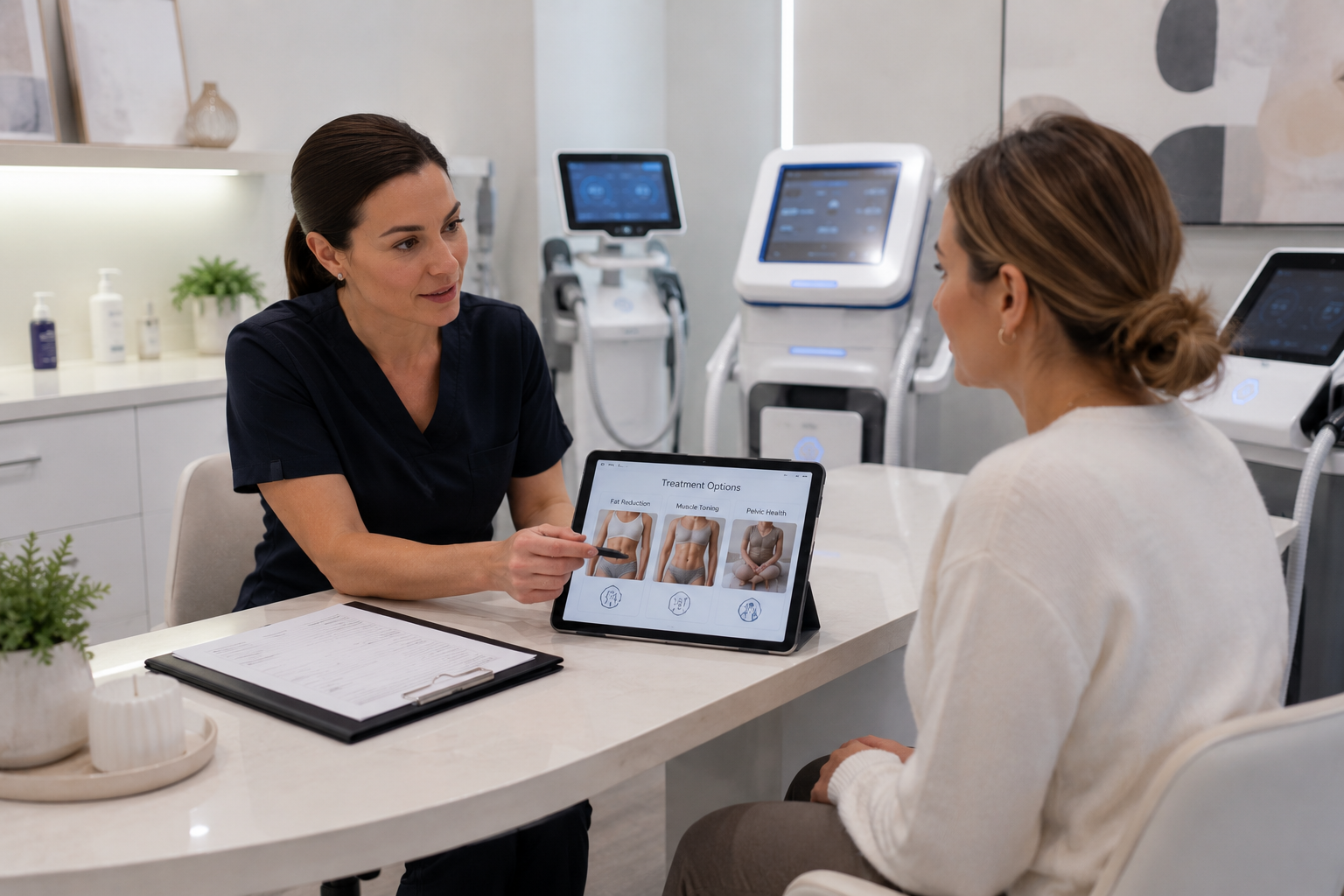
Three Families of Treatment, One Consistent Standard
Understanding how the treatments relate to one another makes it far easier to work out which conversation is worth having first.
It is tempting to think of aesthetic and wellness treatments as a long undifferentiated menu, but they are not interchangeable. Each one uses a different mechanism, targets a different tissue and produces a different kind of change on a different timescale. Choosing well depends less on picking the most impressive-sounding option and more on matching the mechanism to the concern.
Fat reduction and muscle conditioning treatments change body composition. They alter the proportion of fat and muscle in a treated area, which changes contour and shape. They do not tighten loose skin to any meaningful degree, and they are not weight-loss interventions. Pelvic and intimate wellness treatments work on function rather than appearance — bladder control, pelvic floor strength, comfort and confidence. Tissue and collagen treatments work on the quality of the tissue itself, prompting a gradual remodelling response over weeks and months rather than producing an immediate visible change. For those interested in treatments that use energy-based technology to stimulate collagen and improve tissue quality, comparing the technology, suitability and expected costs is an important part of the decision-making process. More information is available through Lipo Freeze 2U Morpheus8 Prices.
Once that distinction is clear, most people find the decision far less confusing. Someone frustrated by a stubborn area of fat around the lower abdomen is looking at a different mechanism from someone whose main concern is leaking when they cough or laugh. Someone who wants better definition through the core after months of consistent training is in a different conversation again. A good consultation begins by establishing which of these three conversations is actually the right one.
Body Composition
Fat freezing and body toning change the ratio of fat to muscle in a specific area. They refine contour and definition — they are not substitutes for weight loss.
Pelvic & Intimate Wellness
Electromagnetic pelvic floor conditioning targets function rather than appearance: bladder control, muscular strength and everyday confidence.
Tissue & Collagen Response
Focused ultrasound prompts the body’s own collagen and elastin production, improving tissue tone and comfort gradually over several months.
Fat Freezing Treatment (Cryolipolysis)
Cryolipolysis, commonly known as fat freezing, uses controlled cooling to reduce stubborn pockets of fat that have not responded to diet and exercise - without surgery, needles or downtime.
Fat freezing is the treatment most people have heard of, and also the one most commonly misunderstood. It is not a weight-loss procedure. It is a contouring procedure, and the distinction matters enormously to whether someone will be satisfied with the outcome. The treatment is designed to address localised deposits of fat in specific, identifiable areas — the lower abdomen, the flanks, the inner and outer thighs, the upper and lower back, the upper arms. It works on the pocket, not on the whole body.
How Controlled Cooling Works
The principle behind cryolipolysis is that fat cells are more sensitive to cold than the tissues around them. Skin, muscle, blood vessels and nerve tissue tolerate a degree of cooling that fat cells do not. That difference in sensitivity is what makes the treatment selective.
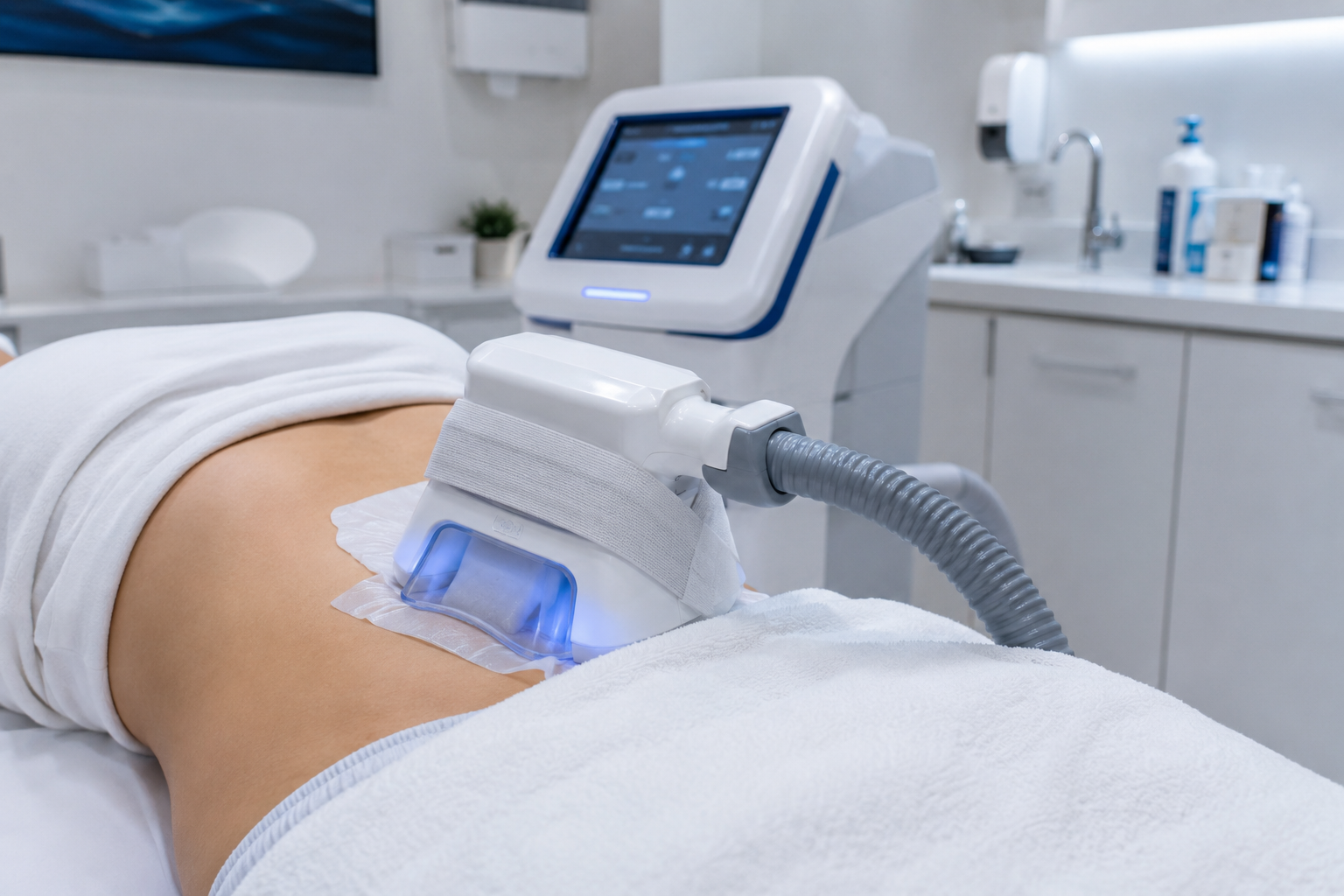
In practice, the session follows three stages. First, a protective gel pad is placed over the treatment area to shield the skin. A cooling applicator is then positioned and draws the fat tissue gently into a cup, holding it in place while the temperature is reduced and maintained for a set period. During this phase most people report an initial sensation of intense cold and firm pulling pressure, which typically subsides within the first several minutes as the area becomes numb. Many people read, work or use their phone for the remainder of the session.
Second, the cooling triggers crystallisation within the targeted fat cells while the surrounding structures remain unaffected. Third — and this is the stage that takes time — the body gradually clears the affected cells through the lymphatic system over the following weeks. Nothing is extracted during the session itself. The visible change happens quietly, internally, long after the appointment has finished.
Areas commonly treated
The reference treatment range covers the lower abdomen, upper and lower back, inner and outer thighs, and additional regions assessed on an individual basis. Suitability for any given area depends on the nature and volume of the fat deposit, the quality of the overlying skin and whether the applicator can achieve proper contact and draw.
How results develop
Initial visible improvement is generally reported from around three to four weeks after treatment. More substantial change typically appears between eight and twelve weeks, with the body continuing to process treated cells for as long as four to six months. This is a gradual treatment, and that gradualness is often an advantage: change that emerges slowly tends to look natural and rarely invites comment from others, which many people specifically prefer.
Where a stable weight and a reasonably consistent lifestyle are maintained, results are considered long-lasting, because the treated fat cells do not return to the treated area. This is not, however, a guarantee against future weight gain. Remaining fat cells elsewhere in the body can still enlarge. The treatment changes a specific area; it does not change how the body responds to a sustained calorie surplus.
Who it tends to suit
- People already close to their target weight who have specific, localised pockets of fat.
- People whose fat deposits have proved resistant to consistent diet and exercise.
- People seeking non-surgical contouring rather than dramatic transformation.
- People who prefer gradual, natural-looking change over an obvious and sudden one.
Who it does not suit
Fat freezing is not appropriate for everyone, and a responsible service says so at the outset rather than at the point of payment. The reference guidance identifies several groups for whom the treatment is unsuitable: those with cold-related conditions such as Raynaud’s phenomenon, cold urticaria or cryoglobulinaemia; those with a hernia at or near the intended treatment site; those who are pregnant or breastfeeding; those with substantial loose skin or insufficient fat in the target area for the applicator to draw properly; and those who are significantly overweight and whose goals would be better served by a weight-management approach first.
Side effects, including the rare ones
Common short-term effects include redness, swelling, bruising, tingling and temporary numbness in the treated area. These typically resolve within days to a few weeks and are an expected part of the process rather than a sign that something has gone wrong.
Rarer effects deserve to be stated plainly rather than buried. Paradoxical adipose hyperplasia — an increase rather than a decrease in fat volume at the treated site — is a recognised, uncommon outcome. Changes in skin pigmentation, either darker or lighter, have also been reported. Cold injury is extremely rare where correct protocols and protective barriers are used. Any service unwilling to discuss these openly during consultation is not giving you the information you need to consent properly.
Preparing for a session
Preparation is straightforward. Avoid applying lotions or oils to the area on the day, wear comfortable and loose clothing, and stay well hydrated. A consultation to review medical history and confirm suitability precedes treatment in every case.
Sessions and Sequencing
Many people achieve a satisfactory outcome from a single session in a given area. Additional sessions may be appropriate where the deposit is larger, where the contouring goal is more specific, or where the first round produced a good but partial result. Because the full effect takes eight to twelve weeks to appear, a second session on the same area is normally only planned after that window has passed and the outcome of the first can actually be judged.
Fat freezing also combines sensibly with other non-invasive treatments. Pairing fat reduction with a skin-tightening or muscle-conditioning approach is a common way to address both volume and definition where a single mechanism would not achieve the whole result. For people exploring different approaches to targeted fat reduction, it can also be useful to compare treatments and understand the costs involved before deciding what is most appropriate. You can find further information on Lipo Freeze 2U Aqualyx Prices when considering alternative treatment options. Any combination should be sequenced deliberately, with sufficient interval between elements, rather than stacked for convenience.
Body Toning Treatment
Body toning uses high-intensity focused electromagnetic technology to stimulate powerful muscle contractions, building and defining muscle while reducing fat in the same treated area.
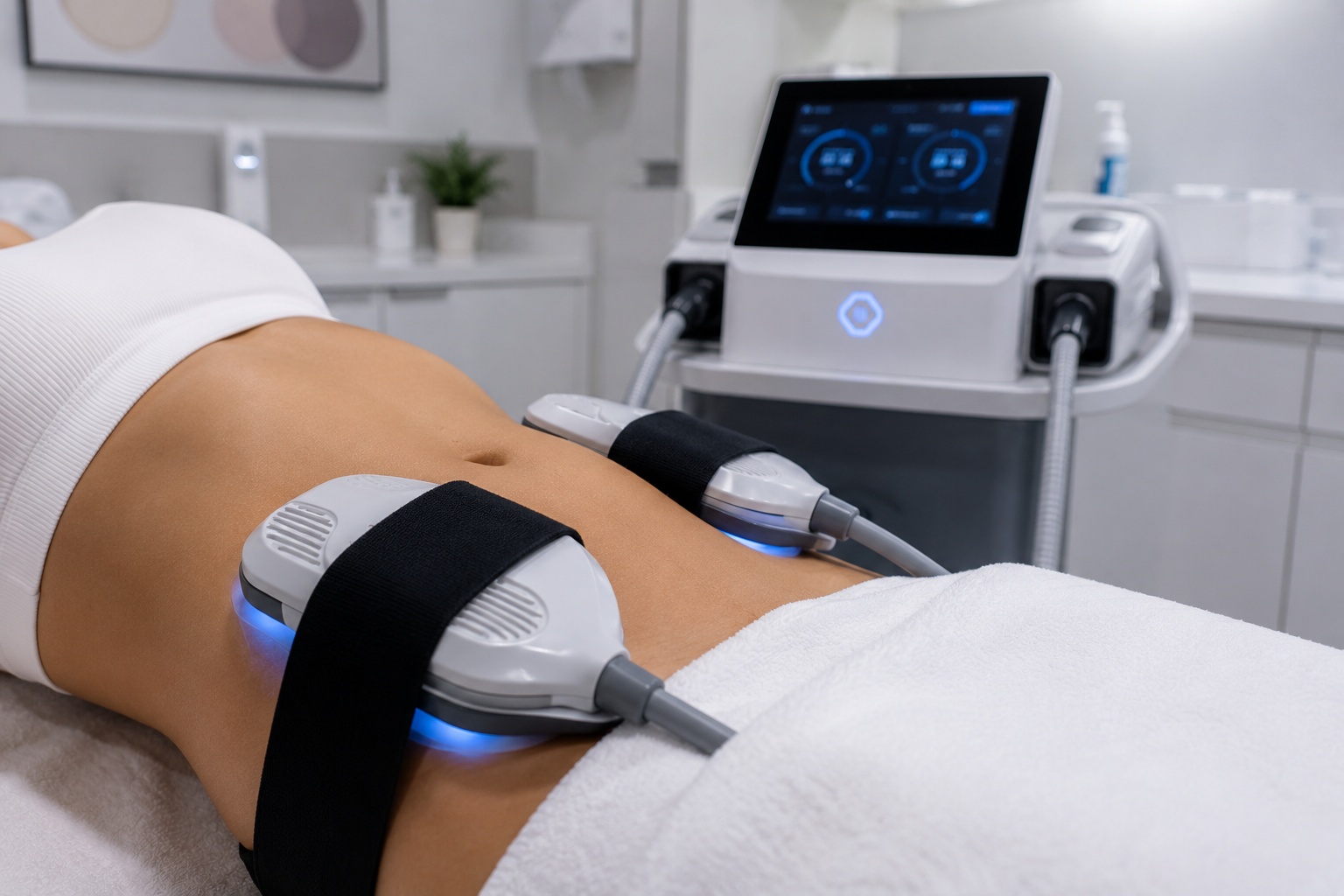
Where fat freezing removes, body toning builds. The two are frequently confused because both are described as body contouring, but they are doing almost opposite things. Fat freezing reduces the volume of fat sitting over a muscle. Body toning conditions the muscle itself, and produces a fat-reduction effect in the same area as a secondary consequence. Someone who is already lean but lacks definition is a candidate for one; someone with a soft pocket of fat over reasonable muscle tone is a candidate for the other; plenty of people are candidates for both, in sequence.
How Supramaximal Contraction Works
The technology induces what are described as supramaximal contractions — muscular contractions more complete than those achievable through voluntary effort. In ordinary exercise, a person typically recruits somewhere in the region of thirty-five to forty per cent of the muscle fibres in a given group at any one time. The electromagnetic field bypasses the usual voluntary control pathway and recruits close to the full fibre population.
A single thirty-minute session is described as producing up to twenty thousand contractions. The intensity of that muscular demand also places metabolic stress on the fat cells in the immediate area, which is the mechanism behind the reported fat reduction alongside the muscle gain. Reference figures cite reduction of fat by up to nineteen per cent and increases in muscle mass of around sixteen per cent, with some people noticing change within three weeks.
Those numbers are averages drawn from the reference material, not promises. Individual outcomes depend heavily on starting condition, consistency of the surrounding lifestyle and the number of sessions completed. Someone who trains regularly and eats well will generally see more from the treatment than someone who does not, which is worth saying because it inverts the assumption that these treatments are for people who have given up on the gym.
Areas commonly treated
- Abdomen — core strength and definition, including support for abdominal separation.
- Buttocks — non-invasive lifting and shaping through gluteal conditioning.
- Hips and flanks — contouring through the area often described as love handles.
- Arms — biceps and triceps definition.
- Thighs — front, back and outer thigh conditioning.
- Calves — muscular definition in the lower leg.
Sessions and timeline
A session lasts approximately thirty minutes. The recommended course is a minimum of four to six sessions, spaced at least two days apart to allow recovery between them. Increased muscle mass is typically noticed two to four weeks after completing an initial block of four sessions. Visible fat reduction in the area follows later, at roughly three months. Muscle gains are described as lasting a minimum of six months where regular exercise continues, and fat loss as permanent where weight remains stable — commonly quoted as six to twelve months of sustained benefit before top-up sessions are considered.
What a session feels like
Most people describe an unusual but tolerable sensation — a strong, rhythmic pulling and tensing, sometimes with mild tingling or stinging. It is not painful, and intensity is adjusted to what the individual can comfortably tolerate. Unlike a hard training session, it does not typically produce delayed onset muscle soreness the following day. Strenuous exercise is best avoided for twenty-four hours either side of a session.
Additional applications
Beyond aesthetic conditioning, the reference material describes two further uses. The first is support for diastasis recti — the separation of the abdominal muscles that commonly follows pregnancy — by strengthening the abdominal wall and reducing the degree of separation. The second is assistance with injury recovery and rehabilitation, through stimulated circulation and reduced inflammation in the treated area. Both applications should be assessed individually and, where a medical condition is involved, in conjunction with appropriate medical advice.
Important restrictions
Body toning carries a more extensive list of contraindications than most non-surgical treatments, and these are absolute rather than advisory. The treatment is not suitable for people with metal implants, rods, pins or orthopaedic joints; an intrauterine device or contraceptive coil; pregnancy or breastfeeding; bleeding disorders or use of blood-thinning medication; cardiac conditions, epilepsy or active malignancy; an active hernia or a muscle or soft tissue injury in the treatment area; or anyone under eighteen. The chest, neck and head cannot be treated. A maximum body mass index of thirty-five applies.
Incontinence and Pelvic Floor Treatment
Electromagnetic pelvic floor conditioning strengthens the deep pelvic muscles without undressing, surgery, needles or recovery time — addressing bladder control, pelvic floor weakness and related concerns.
Of all the treatments described on this page, this is the one people most often delay seeking. Incontinence is extraordinarily common and almost never discussed. A great many people manage it privately for years — planning routes around toilets, avoiding certain exercise, wearing protection as a matter of routine — without ever raising it with anyone, because it feels embarrassing or because they assume it is simply an unavoidable consequence of childbirth or age. It is neither inevitable nor untreatable, and the willingness to have the conversation at all is usually the hardest part of the process.
How It Works
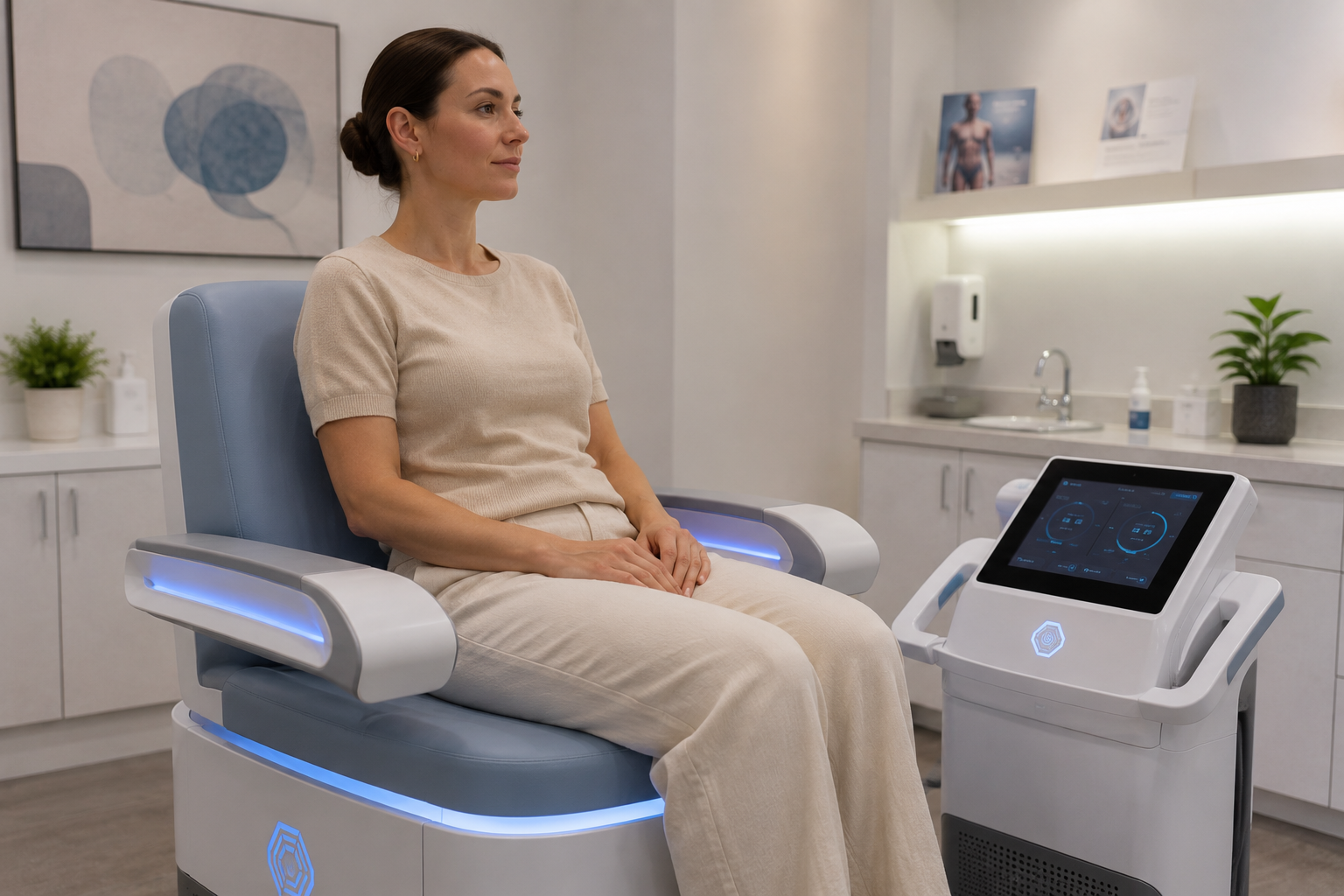
The treatment targets the deep pelvic floor muscles using electromagnetic energy, effectively simulating Kegel exercises at an intensity and volume that cannot be achieved voluntarily. The person remains fully clothed throughout, seated on a specialised chair while the electromagnetic field activates the pelvic floor musculature. A single thirty-minute session is described as equivalent to thousands of manual Kegel contractions.
The practical significance of remaining clothed should not be underestimated. For a great many people, the prospect of undressing and being examined is precisely the barrier that has prevented them from seeking help. Removing that barrier changes who is willing to come forward.
Conditions addressed
- Stress incontinence — leakage triggered by coughing, sneezing, laughing, lifting or exercise.
- Overactive bladder — urgency and frequency that disrupt daily routine and sleep.
- Faecal incontinence — bowel control difficulties arising from pelvic floor weakness.
- Erectile dysfunction — where pelvic floor muscular weakness is a contributing factor.
For people experiencing persistent urgency or frequent urination, further information about Lipo Freeze 2U Overactive Bladder Treatment can help explain the treatment approach in more detail.
Suitability for women
The treatment is described as particularly beneficial postpartum, addressing pelvic floor changes arising from pregnancy and childbirth, and during menopause, when hormonal change frequently contributes to incontinence symptoms. Many women find that pelvic floor exercises alone have not produced the improvement they hoped for — often because it is genuinely difficult to isolate and consistently engage the correct muscles without feedback.
Suitability for men
For men, the treatment is described as reducing urinary incontinence symptoms arising from muscular weakness, helping manage urgency associated with an enlarged prostate, and potentially improving erectile function and ejaculatory control. Male pelvic floor weakness is even less discussed than female pelvic floor weakness, and is frequently assumed to be untreatable when it is not.
Course, timeline and maintenance
A standard course comprises six to eight sessions, generally scheduled twice weekly across approximately three weeks. Initial improvements are reported in as little as three weeks, with noticeable change typically emerging within a few weeks and fuller results developing across the full course. Effects are described as persisting for years, with maintenance sessions every three to twelve months depending on the individual.
Preparation and recovery
Preparation is minimal — loose clothing is recommended, and there is no requirement to restrict fluids unless a specialist has advised otherwise for a separate reason. There is no recovery period between sessions and no downtime afterwards. Most people return directly to whatever they were doing.
A note on comfort. The sensation is frequently described as an extremely intense pelvic floor exercise — unfamiliar, distinctly noticeable, but not painful. Intensity is built up gradually and adjusted throughout the session according to what the individual finds comfortable. Nobody is expected to endure anything unpleasant in order to complete a session.
Vaginal Tightening Treatment
A non-invasive treatment using high-intensity focused ultrasound to stimulate collagen and elastin production in vaginal tissue, addressing tone, comfort, dryness and sensation without surgery or downtime.
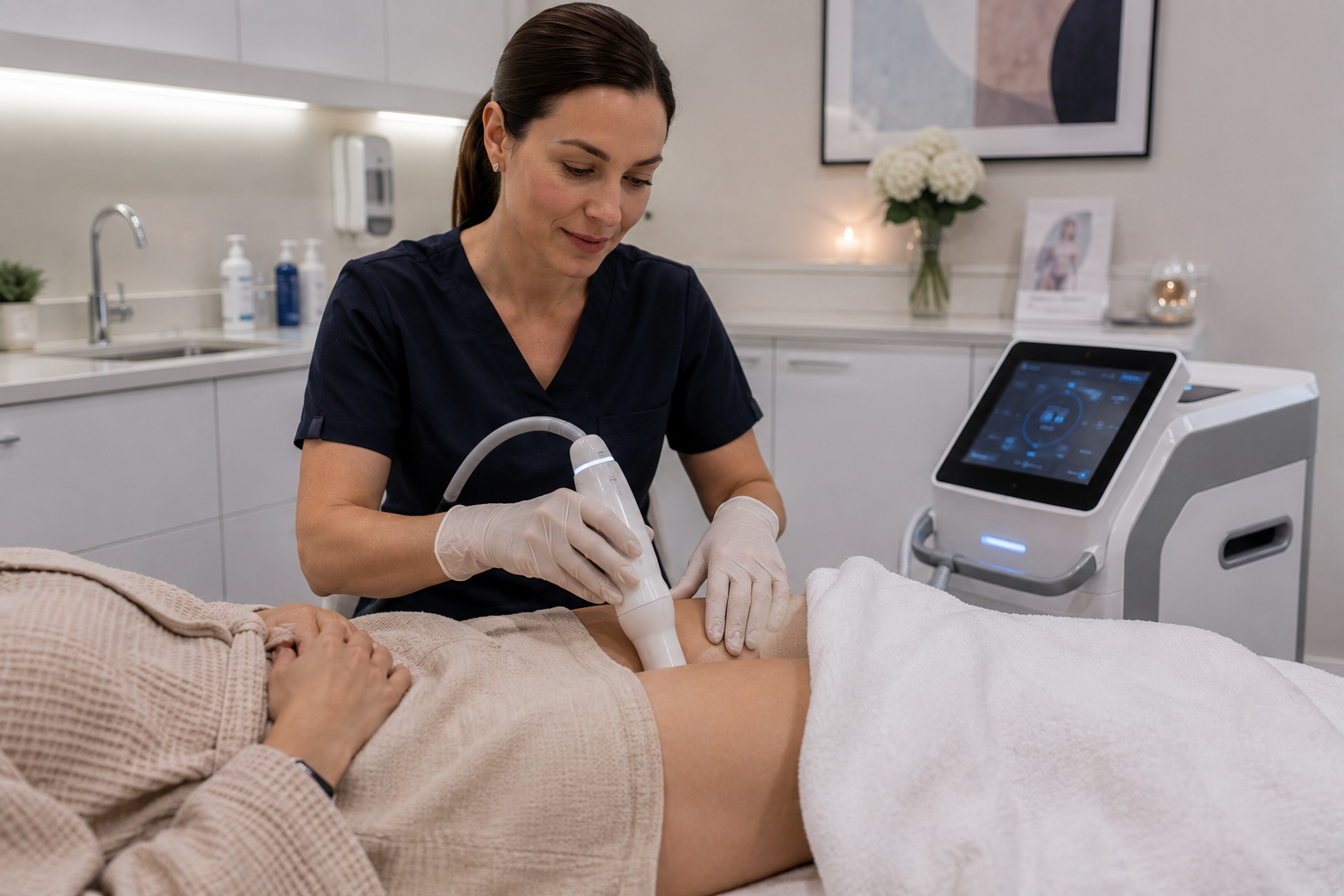
This treatment addresses a set of concerns that are widespread, rarely raised and frequently assumed to be permanent. Changes in vaginal tone and comfort following childbirth or during and after menopause affect a very large number of women, and the majority never discuss them with anyone — not with friends, often not with a GP. The result is that a treatable set of symptoms is frequently endured for years in silence.
How Focused Ultrasound Works
The treatment uses a specialised HIFU wand to deliver focused ultrasound energy into the vaginal tissue. The energy heats the deeper tissue layers indirectly while leaving the surface protected, and that controlled thermal effect prompts the body’s own collagen and elastin production. The change therefore comes from the body’s natural remodelling response over subsequent weeks, not from anything added or removed during the session.
The process runs as follows: an initial consultation assesses medical history and suitability; a topical numbing preparation is applied for comfort; the treatment session delivers the ultrasound energy; collagen activation then develops naturally over the following weeks; and recovery is minimal, with the possibility of mild soreness or swelling.
Reported benefits
- Improved tightness and tissue elasticity through increased collagen production.
- Improved sexual satisfaction and function.
- Reduced vaginal dryness through better natural lubrication.
- Relief of minor stress incontinence through pelvic floor support.
- Reduced discomfort during intercourse.
- Improved personal confidence.
- A non-surgical approach requiring no general anaesthesia.
Who it tends to suit
Suitable candidates include women experiencing vaginal laxity following childbirth, minor stress incontinence, vaginal dryness associated with hormonal change, age-related collagen loss, or reduced sensitivity and discomfort during intercourse. It is not recommended during pregnancy, and certain medical conditions require assessment at consultation before the treatment can be considered.
Sessions, sensation and timeline
Most women are described as benefiting from three treatments spaced four to six weeks apart, with each session lasting approximately thirty minutes. The sensation is generally reported as warmth or tingling. Initial improvements in tightness and lubrication tend to appear within weeks, with fuller results developing across several months as collagen remodelling continues. Results are described as lasting from several months to over a year, with maintenance sessions sometimes recommended annually.
Aftercare
- Avoid sexual activity for twenty-four to forty-eight hours after treatment.
- Expect possible tenderness, mild swelling or light spotting for several days.
- Maintain good hydration, which supports healing and collagen formation.
An honest word on evidence
A 2023 review of the technology indicated promising results where treatment is performed by trained professionals, while noting that outcomes vary between individuals. That is an accurate summary and it is worth repeating rather than overstating: results are not permanent, they are not identical for everyone, and maintenance may be required depending on individual response. Anyone presenting this treatment as a guaranteed or permanent solution is misrepresenting it.
How Treatment Works, From First Contact to Aftercare
Whichever treatment is being considered, the surrounding process is consistent — because the quality of the assessment matters at least as much as the quality of the technology.
Initial Enquiry
A first conversation, without obligation, to understand what the concern is and whether this service is the right fit. For many people this is the point at which something private is spoken aloud for the first time, and it deserves a professional and unhurried response. Nobody should feel they need to have already decided anything before making contact.
Consultation and Suitability Assessment
Medical history is reviewed, the concern is examined in context, and the suitability of each possible treatment is assessed honestly. This is the stage at which a good service will tell someone that a treatment is not appropriate for them. Contraindications are checked properly rather than skimmed, expectations are set against what the treatment can actually deliver, and questions are welcomed rather than managed.
Treatment Planning
Where treatment is appropriate, a plan is built around the individual: which areas, how many sessions, in what order and over what period. Sequencing matters — particularly where two mechanisms are being combined, or where the result of one block needs to be properly assessed before the next is planned. A plan that reflects a real timeline is more useful than one that promises speed.
Treatment at Home
Sessions take place in the person’s own home. There is no waiting room, no travel and no encounter with other clients. For treatments addressing intimate concerns in particular, the difference in comfort is substantial, and it tends to produce a more open and more useful conversation during the session itself.
Aftercare and Follow-Up
Clear aftercare guidance is provided, along with an honest account of how and when results should be expected to appear. Because most of these treatments develop over weeks rather than days, knowing what is normal at week two versus week eight prevents a great deal of unnecessary worry. Follow-up support remains available throughout.
Combining Treatments Sensibly
Several of these treatments complement one another, but combination should be a considered clinical decision rather than an upsell.
The most common sensible pairing is fat reduction with muscle conditioning in the same region — for example, addressing a soft area across the lower abdomen with cryolipolysis while conditioning the underlying abdominal musculature. The two mechanisms address different tissue and produce a more complete change together than either would alone. Sequencing matters: because fat freezing results take eight to twelve weeks to fully appear, planning a combined programme means allowing enough interval to judge each element properly.
Pelvic floor conditioning and vaginal tightening also overlap usefully, since both address aspects of pelvic and intimate wellness through different mechanisms — one muscular, one tissue-level. Where minor stress incontinence and tissue laxity are both present, addressing both can produce a better outcome than treating either in isolation. This should still be assessed individually rather than assumed.
Equally important is knowing when not to combine. Adding a second treatment because it is available, rather than because it addresses an identified concern, is exactly the pattern that leaves people disappointed and out of pocket. If a single well-chosen treatment addresses the actual concern, that is the right plan. A service that always recommends more than one is worth questioning.
- Every combination is assessed for individual suitability before it is proposed.
- Contraindications are checked separately for each treatment, not once for the programme.
- Sufficient interval is allowed to judge the outcome of each element.
- Nobody is advised toward additional treatment they do not need.
- Plans are adjusted if the response to the first stage differs from expectation.
- Realistic timelines are given in advance, not revised afterwards.
Frequently Asked Questions About These Treatments
Which treatment should I be considering?
That depends entirely on what the concern actually is, which is why consultation precedes any recommendation. As a rough guide: a localised pocket of fat that has not shifted with diet and exercise points toward fat freezing; a lack of definition or muscular tone points toward body toning; bladder control or pelvic floor weakness points toward electromagnetic pelvic conditioning; and concerns around vaginal tone, dryness or comfort point toward focused ultrasound. Many people arrive uncertain, and that is entirely normal — working out the right starting point is part of what the consultation is for.
Are these treatments a substitute for diet and exercise?
No, and any service suggesting otherwise is being dishonest. Fat freezing is a contouring treatment for localised deposits, not a weight-loss intervention. Body toning conditions muscle but does not replace training or good nutrition — in fact, people who already exercise consistently tend to see more from it. These treatments address specific concerns that general effort has not resolved. They work alongside a well-cared-for life, not instead of one.
How soon will I see results?
It varies substantially by treatment. Fat freezing shows initial change at around three to four weeks and fuller results at eight to twelve weeks. Body toning shows increased muscle mass at two to four weeks after an initial block of four sessions, with visible fat reduction closer to three months. Pelvic floor conditioning can show improvement in as little as three weeks. Vaginal tightening shows initial improvement within weeks and fuller results over several months. None of these are same-day treatments, and expecting otherwise leads to unnecessary disappointment at week two.
Is treatment at home as effective as treatment in a clinic?
The effectiveness of any of these treatments depends on the practitioner’s knowledge and skill, the quality of the assessment and the appropriateness of the treatment to the individual. All three are entirely achievable in a home setting. In practice, many people engage more openly at home — they ask more questions and speak more frankly about their concerns, which tends to improve the quality of the assessment rather than diminish it.
Will I be told if a treatment is not right for me?
Yes. Each of these treatments carries genuine contraindications, and body toning in particular has an extensive list of absolute restrictions. Suitability is assessed before treatment is offered, not after it is booked. Being told that a treatment is unsuitable is not a failed consultation — it is the consultation working correctly, and it is considerably better than proceeding with something inappropriate.
Do these treatments hurt?
None are described as painful, though all produce distinctly unfamiliar sensations. Fat freezing begins with intense cold and firm suction that typically numbs within minutes. Body toning produces strong rhythmic contractions with occasional tingling. Pelvic floor conditioning feels like an extremely intense pelvic exercise. Vaginal tightening is generally described as warmth or tingling, with topical numbing applied beforehand. Intensity is adjustable throughout in every case, and nobody is expected to tolerate discomfort to complete a session.
How many sessions will I need?
Fat freezing often achieves a satisfactory outcome in a single session per area, with additional sessions considered only after the eight to twelve week window has passed. Body toning requires a minimum course of four to six sessions spaced at least two days apart. Pelvic floor conditioning follows a course of six to eight sessions, usually twice weekly over three weeks. Vaginal tightening typically involves three sessions spaced four to six weeks apart. These are starting points, refined at consultation according to the individual.
Are the results permanent?
Only partly, and the distinction is important. Fat cells cleared by cryolipolysis do not return to the treated area, so that result is long-lasting where weight remains stable — but remaining cells elsewhere can still enlarge with weight gain. Body toning muscle gains last a minimum of six months where regular exercise continues, with fat loss permanent at stable weight. Vaginal tightening results are explicitly not permanent, lasting several months to over a year, with maintenance sessions sometimes recommended. Pelvic floor improvements can persist for years with periodic maintenance.
Is there any downtime?
Effectively none across all four treatments. Fat freezing allows immediate return to driving, work and exercise, though temporary redness or numbness is common. Body toning requires only that strenuous exercise be avoided for twenty-four hours either side. Pelvic floor conditioning requires no recovery at all. Vaginal tightening involves avoiding sexual activity for twenty-four to forty-eight hours and may cause several days of mild tenderness.
Can I discuss intimate concerns comfortably?
This is one of the areas where a home-based, discreet service makes the greatest practical difference. Many people avoid seeking help for intimate wellness concerns because of embarrassment, fear of judgement, or simply not knowing that effective options exist. A respectful, professional, non-clinical environment removes a substantial proportion of that barrier. Pelvic floor treatment in particular is performed fully clothed, which for many people is the single factor that makes the appointment possible at all.